
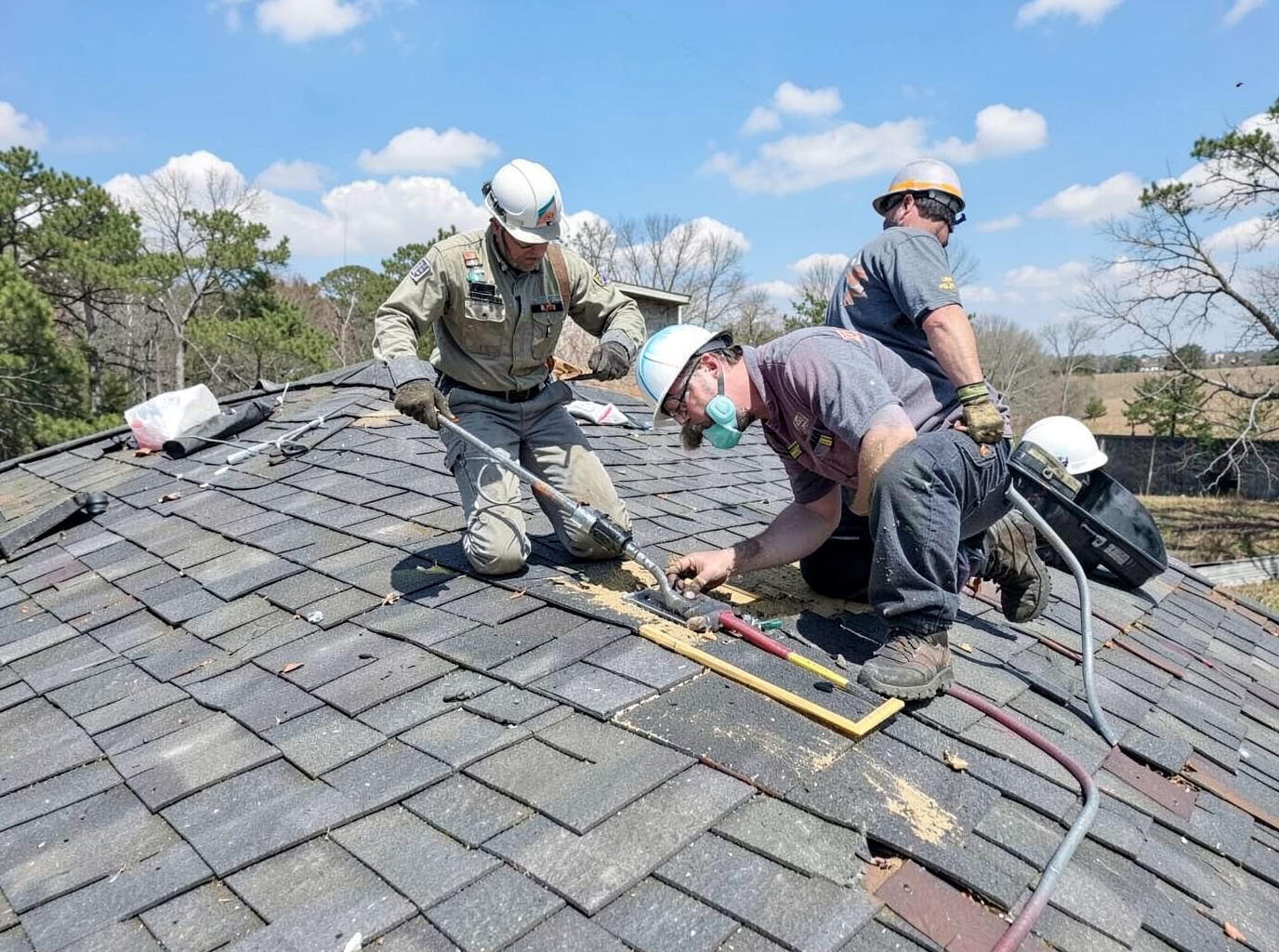
Central Lafayette roofs face constant humidity and sudden downpours that push water under older shingles faster than in drier parts of the state. Homes around downtown and Freetown-Port Rico often date to the 1920s-1950s with steeper pitches or mixed materials that need precise flashing at valleys and chimneys. A contractor based in Lafayette, LA knows the narrow streets and tight lots that limit equipment access during tear-offs.
Summer heat softens asphalt shingles quickly while mild winters still allow moss and algae growth on north slopes. Properties near the Vermilion River or low spots in central blocks see standing water after storms, so underlayment and ventilation choices matter more here than in higher ground neighborhoods. Crews plan work around afternoon thunderstorms common in Lafayette Parish.
Replacing a roof on a block near Jefferson Street or the Oil Center edge means coordinating with traffic and neighbors who share driveways. Upfront quotes that account for these access and drainage realities keep projects on schedule without surprises.
Around Central Lafayette, LA
We regularly work near:
- 📍Acadiana Center for the Arts
- 📍Lafayette Science Museum
- 📍St. John's Cathedral
- 📍Jefferson Street
- 📍Freetown-Port Rico
Roofing Contractor in Central Lafayette, LA — Local Notes
- •Central Lafayette lots are often narrow with mature trees that drop debris and shade roofs, speeding algae growth on north-facing slopes.
- •Many 1920s-1950s homes near downtown have original rafters that require sistering or added bracing before new shingles go down.
- •Flat Lafayette Parish terrain and poor drainage around central blocks mean installers pay extra attention to ice-and-water shield at eaves and valleys.
- •Hot humid summers soften shingles during installation, so crews schedule early morning work to maintain proper nailing patterns.